


October Whiskies of the Month
Distilleries who embrace traditions by carrying them through to the 21st century.
This month, we are giving a nod to a few of many of the distilleries who actively recognise how important their heritage is, from using local, sustainable ingredients to continuing to use traditional whisky making methods. And of course, acknowledging those who came before them, because without their sacrifice the distilleries very likely would not have had the chance to thrive as they do today.


Lowland - Lochlea “Our Barley”
Lochlea represents a welcome return to Scotch whisky’s farming roots. In 2006, owners Neil and Jen moved into Lochlea and at the time it was a dairy farm and had been for many years. It wasn’t until 2017 that construction started, with the goal to transform Lochlea into the distillery it is today. From repurposing cattle sheds into bonded whisky maturation warehouses, to growing barley on their farm for single malt whisky production, Neil and Jen have spared no expense to ensure their ‘farm to bottle’ approach has been executed perfectly. Recently, I was lucky enough to be given a private tour of the distillery by none other than the Master Blender herself. I got to see the ins and outs of the distillery and even more excitingly was generously given a few drams of Lochlea’s brand new core range. Unsurprisingly, Lochlea has once again completely outdone themselves, despite being such a new distillery.
The entrance of the owner’s house is actually inside the distillery itself. So not only do Neil and Jen’s family live on-site, they have an open-door policy for the staff, proof they always want to be available to not only help everything run smoothly, but to be entirely on top of always producing a quality whisky. In addition to ensuring quality is being prioritised, award winning Master Blender Jill Boyd joined the team at the end of 2024 and will no doubt continue to push Lochlea to deliver high quality, and perhaps more importantly, absolutely delicious single malt whisky.
Historically, Lochlea’s farm did grow plentiful barley, albeit at the time mostly for livestock feed; it is nice to know the farm is continuing to grow this very essential ingredient once again. Along with using their own barley, the distillery also has their own on-site water source, ensuring they have full control over the specially crafted ingredients that go into their spirit.
Lochlea’s Our Barley expression has been matured in a combination of ex-bourbon, ex-oloroso and STR wine casks, sticking true to Lochlea’s mantra of not cutting corners, but instead often choosing the tougher route to give us the highest quality spirit. Our Barley offers notes of marmalade, orchard fruits and cereal and delivers a peppery smooth finish.

Highland - Glenturret Triple Wood
Glenturret distillery carries centuries of history. In recent years the distillery unearthed a rental agreement of Sir Patrick Murray of Ochtertyre from 1763 referring to Thurot Distillery, the original name for The Glenturret distillery. With this document the distillery proudly claims they are the oldest working distillery in Scotland. In 1923 the distillery was forced to halt production due to US prohibition and high duty rates. It remained closed until 1957 when the ambitious James Fairlie took it on with the goal ‘to preserve the traditional methods of distilling and to grow the appreciation for whisky.’ For more than 20 years Fairlie successfully led the distillery as both Director and Master Distiller.
Today, the distillery has taken on a new approach, with highly respected whisky maker Bob Dalgarno releasing a new range that is still careful to preserve the distillery’s traditional practices. In 2023 Glenturret became Butterfly Mark Certified. This certification recognises that Glenturret has embedded sustainable practices throughout the business safeguarding the distillery for generations of distillers to come.
The Triple Wood expression is matured in three different cask types which ultimately give this whisky a gentle, rounded combination of flavours. Maturation in American and European sherry seasoned casks give light malt and oak notes with a warm ginger and cinnamon spice. While the added flavour from maturation in ex-bourbon casks offers a sweet barley sugar, vanilla and toffee sweetness. A perfect example of a whisky that balances innovation with an incredible legacy.
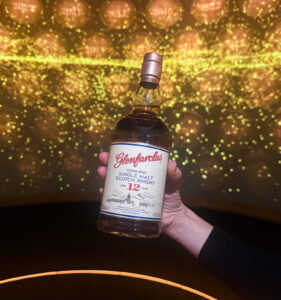
Speyside - Glenfarclas 12
Few distilleries embody resilience quite like Glenfarclas. Dating all the way back to 1865, John Grant bought the Glenfarclas distillery for a mere £512. In the 1890s, 50% of the distillery was sold to the Pattison brothers, who ended up being responsible for one of the worst downfalls in Scotch whisky history. The ‘Pattison Crash’ as it is known today, was the result of two brothers from Leith who took advantage of the whisky boom in the late 1800s: buying several whisky distilleries using borrowed credit and aggressive marketing tactics. This also included fraudulent bookkeeping and selling stock at inflated profits. Whilst also selling their whisky under premium names despite it only containing cheap spirits. Before the brothers were convicted of fraud and embezzlement in 1901, they had run many distilleries into bankruptcy – Glenfarclas being one of their victims. After this, the Grant family decided to never again allow their distillery to be in the hands of someone else.
It took them 15 years to come back from their financial woes, but today the distillery thrives and in now led by the 5th generation of the family, one of the few privately owned distilleries in Scotland.
Being privately owned isn’t Glenfarclas distillery’s only claim to fame, they are also one of the last distilleries in Scotland to directly fire their stills. A few decades ago, of course direct fired stills were the only way to go – but with advances in technology many distilleries have opted for a more modern approach; and you could say for good reason. Tending a fire and ensuring a consistent temperature is held during distillation is not an easy feat and requires years of training to master. So, while direct fired stills may be the more difficult approach, it is the traditional way of making whisky. It makes sense that a distillery like Glenfarclas would want to honour this traditional method and continue to distil their whisky this way.
Glenfarclas 12 is a perfect introduction to their style. This whisky is aged in European ex-oloroso sherry casks, which gives that subtle sherry-cinnamon and clove spice while allowing the sweetness from the European oak cask to come through as well. Both spice and sweetness complement each other in a unique and complex way.

Islay - Bunnahabhain Stiùireadair
“Stiùireadair” translates from Scots Gaelic as “helmsman,” a tribute to the sailors who once ferried barley to Islay and whisky back to Glasgow. Without their skill and perseverance, Islay whisky would never have thrived. The waters around the island are notoriously treacherous, with strong tides, unpredictable weather, and rocky coastlines making every crossing a challenge. Yet these sailors braved the journey routinely, bringing barley to Islay from Glasgow, before carrying casks of spirit back across the same perilous waters. Over 100 years ago, growing barley on the very windswept Isle of Islay was near impossible, so relying on these sailors to transport both barley and casks of spirit were not only essential, but a highly respected role in keeping Islay whisky alive.
Founded in 1881, Bunnahabhain sits on the rugged northeast coast of Islay, a distillery that for much of its early history was accessible only by sea. Its remote location, framed by the Sound of Islay, means the influence of the coast is woven into every dram.
Stiùireadair reflects Bunnahabhain’s coastal character. An unpeated Islay single malt; it is deliciously sherried whilst keeping to Bunnhabhain’s signature maritime flavours. This single malt starts off with the sherried sweetness on the nose which is complimented by smooth salted caramel and dried fruit notes on the palate. The finish transports you straight to Bunnahabhain bay with a sea-breeze freshness.

Blend - Malt Riot
This blended malt is named after quite a significant moment in Scotch whisky history. An event seen only a few times in Scotch whisky history, the Government attempted to impose certain tax regulations which the public absolutely did not agree with. We’re going back to 1725, and the Government decided it was time to tax malted barley. This of course would mean a noticeable increase in the cost of whisky, beer and other cereal-based essentials. The people of Glasgow disagreeing with this decision, fought back. Malt stores were barricaded, riots broke out and excise men were chased from the city. A local member of parliament and former tax collector who was in favour of the new malt tax would soon see his home looted and destroyed. The next day, Captain Bushell’s troops fought back, which resulted in the public breaking into the town’s weaponry store in retaliation. In the end, 9 rioters were killed and 17 were injured. After the fighting, the local MP whose home was destroyed was compensated for the damage.
However, in an interesting turn of events, he decided to use this money to purchase Islay and part of Jura with the idea behind the purchases to encourage local farmers to seed surplus barley. Thus, began the legal production of single malt Scotch whisky production on the islands.
So, you could say, without this dramatic chain of events, the islands would not be producing the same amount of single malts as they do today, and barley would likely not be growing as abundantly on the islands as it is today.
Malt Riot shares a blended story of both a dark and hopeful time in history. As well as this, the flavour profile blends those sweet vanilla, toffee notes with orchard apple and pear fruits, leading to a subtle, light, spicy finish.
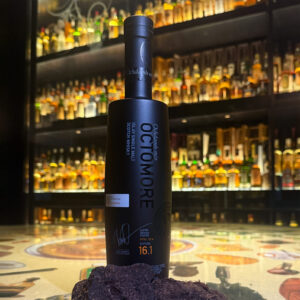
Luxury - Octomore 16.1
The iconic range from Bruichladdich distillery – Octomore described as ‘super heavily peated’ is something to behold. When Bruichladdich was established in 1881 it focused on unpeated single malts. Over the past 144 years the distillery has been mothballed a number of times but has been thriving since its most recent reopening in 2001; where, thanks to Master Distiller Jim McEwan and former owner Mark Reynier, the distillery decided to release two new peated single malt ranges. In 2006 we saw the first of Bruichladdich’s range hit the shelves: Port Charlotte, which showed expressions using locally grown barley and age statements from 10 to 18 years old. Two years later Octomore 01.1 was released with a particular key to be aware of: #.1 for Octomore single malt matured in ex-bourbon casks, #.2 typically matured in slightly rarer casks like ex-cognac or ex-wine and #.3 which is made using barley grown directly from Bruichladdich’s own farms.
The more significant factor to note with Octomore is of course the heavy use of peat. In fact, this range takes the cake for being the most peated single malts to ever be made, with the highest PPM coming in at 309.1 with Octomore 8.3; in comparison, your typical Ardbeg has 50PPM.
Perhaps it was because the distillery chose famously to not use peat for so many years that when peat finally was used, they decided to go as big as they could, and why not!
Following the key above, Octomore 16.1 is aged in ex-bourbon casks for a minimum of 5 years. Much like many other single malts in this range, 16.1 offers us waves of smoke, while balanced with salted caramel, honeyed melon and lingering chocolate richness. Sweet, smoky, complex, this whisky is a bold reminder of peat’s enduring role in shaping Scotch whisky’s identity.