

August Whiskies of the Month: Heritage Revival
Our August Whiskies of The Month explores Scotland’s rich past and ongoing revival, from historic abbeys and recovering whisky regions to communities strengthened by the return of distilling. Each dram tells a story of heritage, resilience and renewal.

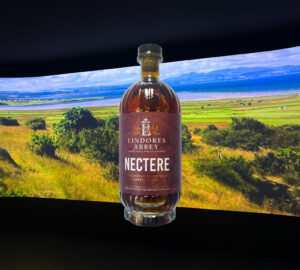
Lowlands - Lindores Abbey Nectere
Lindores Abbey is well known as the spiritual home of Scotch whisky as it is where the first recorded mention of Scotch whisky was found. Lindores was established in 1191 by Tironensian monks (a French monastic order from Tiron, France) and operated as an Abbey until 1559. During this time the earliest written reference to Scotch whisky appears in the exchequer roll of 1494. It named Friar John Cor, being commissioned by King James IV to turn eight bolls of malt into aqua vitae, water of life. Lindores Abbey and its history had largely fallen into obscurity until the distillery opened its doors and began distilling whisky in 2017 after a 523-year hiatus.
Nose: Sweet treacle, vanilla cream, apples, cinnamon and raisins.
Palate: Sticky dark fruit, milk chocolate, toffee and pecans, with a velvety texture.
Cask: Oloroso, Pedro Ximénez, Amontillado and Palo Cortado (1-2% of sherry production).

Highlands - Isle of Raasay The Draam
Raasay is an island found between the Isle of Skye and the mainland, and its biggest attractor is tourism. Some of the sights include castle ruins, inscribed stones, and abandoned crofts. An individual croft is effectively a self-sufficient small-scale farm that was common across the highlands and islands; this would often be a family renting the land from the landowners. But now the crofting way of life is largely lost, in part because of the Highland Clearances. The Clearances happened in two phases between 1750 and 1860, and were largely imposed by the landowning class after the failed Jacobite uprising and the loss at the battle of Culloden (1745-6).
The now British Government had the Jacobite loyal landowners forfeit their titles, traditional dress was banned and the power of the clan chiefs diminished. The new and old British loyal landowners found it more profitable to farm sheep in the highlands than it was to take rent from those living there and so the Scots were forcibly or coercively evicted. The clearances on the Isle of Raasay in the early 1800s were particularly cruel which led to the population struggling for well over a century until the Isle of Raasay Distillery opened in 2014. Its establishment coincided with an 8% increase in the island’s population, bringing the total number of residents to 194. This marks the first time since the Highland Clearances that Raasay’s population has grown so significantly. Most importantly, the distillery has attracted a new generation of young people to live and work on the island, helping to secure a brighter future for the community.
Nose: Savory peat, honeycomb, plum crumble, and hints of pear or apricot.
Palate: Creamy texture with notes of ginger, stewed red apple, dark fruit, and a light heather smoke.
Cask: First-fill rye whiskey, Chinkapin oak and first-fill red Bordeaux wine casks (50% peated, 50% unpeated).
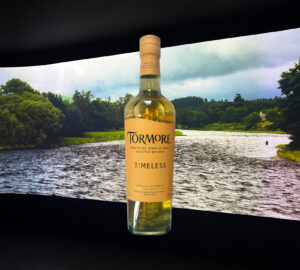
Speyside - Tormore Timeless
Tormore was founded in 1957 by Lewis Rosenstiel. He was a USA born philanthropist and liquor distributor and began his whisky journey at his uncle’s distillery, Susquemac Distilling Company in Kentucky. The idea for Tormore was born in 1954 when Rosenstiel decided he wanted to expand his whisky business to Scotland. The architect intentionally used local resources and builders to create the distillery and distillery community, and tried to envision it ‘as a painter would think of it, not as a town planner’.
It came at a tough time for the industry because after WWII, the Scotch industry’s production had dropped from 40.5 million litres, to basically nothing. In the mid-1950s it grew again to around 45.4 million litres. When Tormore was founded and built by Rosenstiel, the USA was becoming the biggest market for Scotch whisky (42% by 1970). Tormore was the first Speyside distillery founded in the 20th century in Speyside at a time when Scotland and the Scotch industry were just getting back on their feet. It marked the first real growth Speyside had seen since the late 1800s.
Nose: Fresh orchard fruits, green apple, and fresh pear meet floral and honeyed aromas.
Palate: Lemon zest, peach tea and honeysuckle complemented by light spice notes on the palate, for an elegant, fruit-forward dram.
Cask: Bourbon.
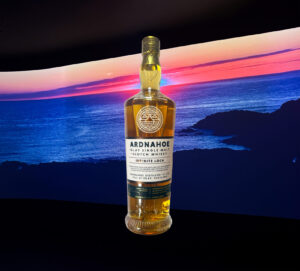
Islay - Ardnahoe Infinite Loch
Continuously inhabited since 10,000 BC, Islay is an island that has truly weathered the passing of time. Like the Isle of Raasay, however, Islay was affected by the Highland Clearances. Its population, which once exceeded 15,000 people, has fallen to just over 3,000 today. Despite that, the island has had and continues to have, a strong whisky industry which makes it hard to talk about in relation to the revival of heritage – it has always been there!
The second oldest continuously running distillery in Scotland, Bowmore, was founded in 1779 and is the oldest licensed distillery on Islay. The key word there being ‘licensed’. During the mid-1600s, many of Islay’s whisky was made in sheds in the open until the Excise Act came into effect which both prevented open air distilling and imposed the tax on whisky incredibly high. However, the tax men themselves weren’t particularly keen on visiting Islay, due to a lack of understanding of island locals and life. Islay continued to produce whisky through the days of illicit distillation, and during the American Prohibition when the Scotch industry should have struggled, Laphroaig was legal to buy in American pharmacies as its aroma was marketable as medicine. Islay’s whisky industry is and has always been strong. Founded in 2019, Ardnahoe is the youngest of Islay’s nine distilleries and the newest Islay whisky we stock in our shop. Its establishment represents the continued growth of Islay’s whisky industry, which has remained a vital part of the island’s economy and identity for centuries.
Nose: Sea spray and dried seaweed come to mind. But among the notes of charred embers, grilled beef, smoked paprika powder and gentle citrus fruits.
Palate: Oily mouthfeel, quite sooty while also highlighting peaty barley husks, draff and rauchbier. Strong notes of bonfire, a pinch of white pepper, smoked oysters and sauerkraut. Just a sliver of fennel and grapefruit.
Cask: Bourbon and Oloroso.

Blend - The Sassenach Spirit of Home Edition
Scotland has always been an attractive destination for global tourism, now more than ever because of the digital age. In fact, around 8% of tourists or just over 700,000 people say they visited Scotland because of a TV show they’ve seen. Outlander, based on the books by Diana Gabaldon, has emerged as a powerhouse, driving screen-tourism in Scotland with some filming locations seeing a 300% increase in visitor numbers since season 1.
One of these sites is Doune Castle which serves as Castle Leoch, the seat of Clan MacKenzie in Outlander, and since season 1, it has seen a 200% increase in visitors annually. In 2025, Outlander front man, Sam Heughan and partner Alex Norouzi, took a step into another of Scotland’s biggest industries and acquired Crafty Distillery in the Scottish Lowlands and renamed it Galloway Distillery. There they make several spirits under the name The Sassenach, derived from the Gaelic word Sasunnach, meaning ‘Saxon’, later used to describe English people. Galloway distillery makes gin, vodka, tequila and of course, their blended whisky, the Spirit of Home. Outlander has had an enormous impact on Scottish tourism bringing in hundreds of thousands of tourists and creating renewed interest in sites like Doune castle.
Nose: Malty with a honey sweetness and touches of red apples, peaches, pears, and a hint of seaweed.
Palate: Peppery with a touch of barley sugar, grilled pineapple, citrus fruits, honey, and vanilla.
Cask: Organic Single Grain, finished in Madeira casks.

Luxury - Glen Scotia 18 Year Old
Campbeltown is now the smallest of the five whisky producing regions in Scotland with its three distilleries, but once it was known as the whisky capital of the world with 30 active distilleries at one time in the 1800s. Many factors contributed to the fall of whisky production in Campbeltown including the American Prohibition and both World Wars, however, the extraordinary volume of distilleries itself contributed to the downfall.
With so many distilleries in one place it was inevitable that the local area would run out of resources leading to shipments of barley being sent for from Russia. Eventually under such pressure from the World Wars, the Prohibition and the lack of resources, corners were cut which led to whisky that did not meet the standard set by Campbeltown’s reputation. As a result, people simply stopped buying as much. In the early 2000s the region became a focus for renewed debate. Campbeltown was now home to only two operating distilleries, Springbank and Glen Scotia, both of which had survived the decline of the town’s once-thriving whisky industry and as such, was at risk of losing its status as a whisky region. In response, the owners of Springbank Distillery, determined to preserve Campbeltown’s whisky heritage, invested £4 million in reviving the old Glengyle Distillery. Reopened in 2004, Glengyle became Campbeltown’s third active distillery, matching the same number of distilleries as the Lowland region at the time. Today, Springbank, Glen Scotia and Glengyle continue to support the growth and preservation of Campbeltown’s rich whisky heritage.
Nose: Crisp saltiness, perfumed floral notes and thick sweet toffee.
Palate: Rich deep vanilla fruit flavours, apricot and pineapple, plump sultana.
Cask: First fill oloroso sherry finish.