

April Whiskies of the Month: Ancient Gaelic Festivals
The theme for April’s whiskies is the ancient Gaelic festivals. The ancient Scots and Irish had great reverence for the natural world and would hold ceremonies and grand rituals to honour the changing of seasons. Each of these whiskies has been selected because of their connections to the themes of these festivals – Lughnasadh, Samhain, Imbolc, and Beltane. At the end of this month, Edinburgh’s own festival of Beltane will be held at Calton Hill, which means it is the perfect time to learn about the traditions that shaped Scottish life for centuries.

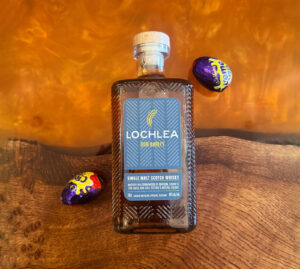
Lowlands – Lochlea Our Barley
Lughnasadh (pronounced LOO-nah-sa) is traditionally held on the 1st of August and marks the beginning of the harvest season. The name derives from Old Irish, a combination of ‘Lug’, Irish god of the sun (Lugh), and ‘násad’, a gathering or assembly. Historical Scottish traditions for the festival included building towers out of dirt, fighting with sticks, and the baking of a special cake called a lunastain.
To honour this particular time of year, we have chosen Lochlea. Lochlea is an independent farm distillery, which means that they grow (and harvest) their own barely, hence this expression’s name. All of their expressions are named for different parts of the farming year – sowing, harvest, fallow, and ploughing. Historically, the site was a dairy farm but converted to whisky-making in 2018. The site also has a connection to Scotland’s most famous poet, Robert Burns, who worked there before his literary career took off. Because of its light and easy drinking character, we are also pairing this whisky with a chocolate easter egg!
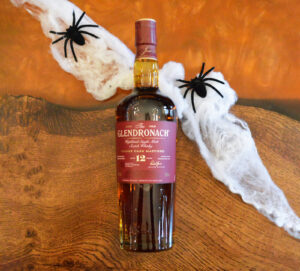
Highlands – Glendronach 12 Year Old
Samhain (pronounced SAH-win) arrives on the 1st of November and marks the end of the harvest and the onset of winter. It was seen as a time when the boundary to the otherworld grew thin, allowing spirits, fairies, and ghosts to cross into this world. Such creatures would demand hospitality, and festivals were organised to appease them. From the 16th century, Scottish celebrations included guising, the wearing of costumes and going door-to-door. This is suggested to be the origins of trick-or-treating at Halloween.
Appropriately, the Glendronach Distillery has a ghost story of its own. The rich flavour and deep colour of the whisky is derived from its time spent in sherry casks imported from Spain. But on one occasion in the 1970s, a sherry cask delivered to their warehouse brought with it a ghost they imaginatively termed ‘the Spanish Lady’. Unsurprisingly distraught at being forced from Spanish sun to Aberdeenshire damp, she haunted the workers for decades before eventually settling at a nearby hotel, and remains particularly active in the Glendronach suite there.
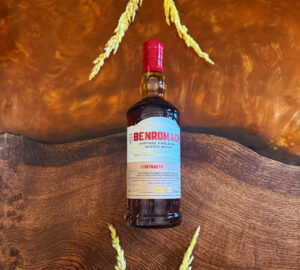
Speyside – Benromach Organic
Imbolc (pronounced as you’d expect) is celebrated on the 1st of February at the beginning of lambing season and the welcoming of spring. Following the Christianisation of Ireland and Scotland, the festival was subsequently dedicated to St. Brigid. In Scotland, a doll meant to represent Brigid was paraded around communities by girls and young women, to venerate her role as a healer and maternal figure. Other traditions included the pouring of milk on the ground and porridge into the sea.
As Imbolc is a celebration of nature and growth, we have chosen Benromach Organic to represent it. This is the first Scotch whisky to be certified as organic by the UK Soil Association. The Soil Association’s standards for this are rigorous, ensuring that the use of pesticides, herbicides, and other chemicals in the production is minimised. This also extends to the casks used which is why this whisky has been matured in Virgin American Oak for nine years.
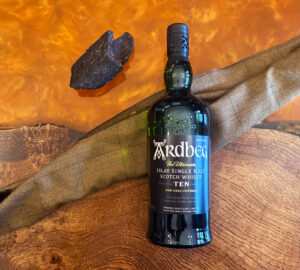
Islay – Ardbeg 10 Year Old
The festival of Beltane (pronounced BEL‑tayn) falls on the 1st of May, traditionally regarded as the start of summer. A special bonfire would be built, believed to have protective powers, and people would walk around it or even jump over the embers. Each household fire would be doused and then relit from this bonfire to ward the home from evil. In the town of Peebles near the Borders, the celebration lasts an entire week, and records of festivals there date back to the 15th century. Interestingly, Edinburgh’s own fire festival is held annually since 1988 (the same year SWE was founded), on the 30th of April on Calton Hill.
There is no better way to represent a fire festival than with a peated whisky, and Ardbeg is a prime example. Since 1815, the distillery has been making potent, fiery whisky by burning peat, the same substance that would have historically been used to make the Beltane bonfire on Islay. The 10 year old expression boasts a PPM count between 55-65, making it heavily peated.
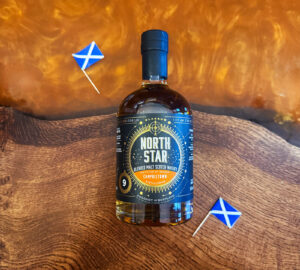
Blend – North Star Campbeltown
The Winter Solstice, the shortest day of the year, was also an important day in the ancient Gaelic calendar. During this time, Ursa Minor is visible, but ancient Scots knew it as ‘An Dreagbhod’, the ‘meteor constellation’. One of the stars in this constellation is Polaris, the North Star. In Scots Gaelic, it is named ‘An Reul-iùil’, or ‘the guiding star’. Polaris was essential for celestial navigation, and the wide travelling of the Scots and Irish means that their traditions spread far and wide. These festivals are now celebrated all across the globe, in countries such as Canada, Mexico, Brazil, Chile, and Russia, amongst others.
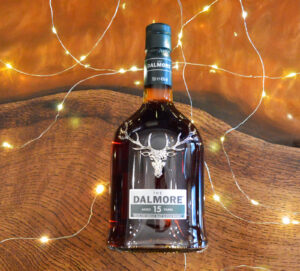
Luxury – Dalmore 15 Year Old
Rather than an ancient festival, our luxury whisky honours a modern one. The Royal National Mòd is the largest Gaelic arts and culture festival in Scotland and has been held in different towns and cities across the country since 1892. On multiple occasions it has been located in the northwestern Highlands, where the largest percentage of Gaelic speakers are based.
It is also the location of Dalmore Distillery, whose iconic logo dates back even further than the festival. In the 1200s, the King of Scotland, Alexander III, was almost killed on a hunting trip. He was saved from the danger by Colin of Kintail, who was then given the right to use the 12-pointed stag as his symbol, and would later go on to found Clan Mackenzie. After the distillery came under the clan’s control in the 1860s, they decided to use the stag as its logo. The historic seat of the clan is Eilean Donan Castle, which is featured in our Sense of Scotland room!